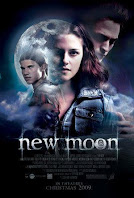
5th and 6th period kids - Be here NO LATER THAN 6:30 a.m. We will meet by the bus loop. You can wear jeans (NO SHORTS), a nice t-shirt and a jacket. Wear sneakers, too (we will be taking a walking tour). Bring $20-$30 for food, as we will be eating breakfast and dinner off the Turnpike...and you can buy lunch at the festival. Tell your parents that we will be back between 10 and 11 p.m. You can give them a definite time when we stop for dinner.
I cannot wait! Bring your cameras!!!!! Love you!
Thursday, January 28, 2010
OUR FIELDTRIP!

Wednesday, January 27, 2010
Periods 3 & 4 - Assignment :o)
 In the first of the journal entries in TFWD, there is talk about sororities and gangs. In sororities, Greek letters symbolize their "club." In gangs, however, graffiti often is their tag. In both sororities and gangs, they use symbols and letters to indicate their affiliation, and they serve as a part of their identity.
You are going to put Greek symbols together to create a name or nickname, or you can create a graffiti version of your name. Remember, color is just as important as letters, as they symbolize certain personality traits.
Create your name on an 8.5 x 11" sheet of paper, and spruce it up nicely! Can't wait to see them!
This is due Friday for 4th and Monday for 3rd.
Monday, January 25, 2010
Periods 3 & 4 Home Learning Questions
Period 4 has already read the first few excerpts in Anne Frank: The Diary of Young Girl , as well as the "Foreword" and "Freshman Year; Fall 1994" in The Freedom Writers Diary (TFWD). Period 3, that will be your charge Tuesday night. With that said, your homework is to answer the following questions using specific examples or details from the text.
1. What is the theme (life lesson) of the "Foreword" and "Freshman Year; Fall 1994" of TFWD? Which statement from the section supports that theme? You should also use details to bolster your claim. (short response)
2. Do any of the entries in "Freshman Year; Fall 1994" support the ideas that Zlata expresses in the "Foreward"? Use details to support your response. (short response)
3. Select one of the personality traits (hardworking, innovative, flexible, caring) and show how it helped Ms. Gruwell better meet the needs of her students. Use details from the entries to support your response. (short response)
4. Compare and contrast any of the themes, events, feelings, OR concepts that you've read about so far in Anne Frank: The Diary of Young Girl and TFWD. (extended response)
5. If you had to do a research project on an event, theme, issue or concept in TFWD, what would it be? Use details from the entries to support your choice. (short response)
Grammar, punctuation, and spelling WILL count!
Period 4's due date is 1/27; Period 3's is 1/28. You must write the questions and underline your answers. You can type it if you choose. LOVE YOU ALL!
Periods 3 & 4
 Taken from www.about.com, here are 33 facts about the Holocaust. From each of the five sections, list one fact that you were not aware of, or one fact that shocked you. Be sure to explain why. Grammar will count! You must post by Thursday (2/4/10) at 11 p.m.
What Does Holocaust Mean?
- The Holocaust began in 1933 when Hitler came to power in Germany and ended in 1945 when the Nazis were defeated by the Allied powers.
- The term "Holocaust," originally from the Greek word "holokauston" which means "sacrifice by fire," refers to the Nazi's persecution and planned slaughter of the Jewish people. The Hebrew word "Shoah," which means "devastation, ruin, or waste," is also used for this genocide.
- In addition to Jews, the Nazis targeted Gypsies, homosexuals, Jehovah's Witnesses, and the disabled for persecution. Anyone who resisted the Nazis was sent to forced labor or murdered.
- The term "Nazi" is an acronym for "Nationalsozialistishe Deutsche Arbeiterpartei" ("National Socialist German Worker's Party").
- The Nazis used the term "the Final Solution" to refer to their plan to murder the Jewish people.
- It is estimated that 11 million people were killed during the Holocaust. Six million of these were Jews.
- The Nazis killed approximately two-thirds of all Jews living in Europe.
- An estimated 1.1 million children were murdered in the Holocaust.
- On April 1, 1933, the Nazis instigated their first action against German Jews by announcing a boycott of all Jewish-run businesses.
- The Nuremberg Laws, issued on September 15, 1935, began to exclude Jews from public life. The Nuremberg Laws included a law that stripped German Jews of their citizenship and a law that prohibited marriages and extramarital sex between Jews and Germans. The Nuremberg Laws set the legal precedent for further anti-Jewish legislation.
- Nazis then issued additional anti-Jews laws over the next several years. For example, some of these laws excluded Jews from places like parks, fired them from civil service jobs (i.e. government jobs), made Jews register their property, and prevented Jewish doctors from working on anyone other than Jewish patients.
- During the night of November 9-10, 1938, Nazis incited a pogrom against Jews in Austria and Germany in what has been termed, "Kristallnacht" ("Night of Broken Glass"). This night of violence included the pillaging and burning of synagogues, breaking the windows of Jewish-owned businesses, the looting of these stores, and many Jews were physically attacked. Also, approximately 30,000 Jews were arrested and sent to concentration camps.
- After World War II started in 1939, the Nazis began ordering Jews to wear a yellow Star of David on their clothing so that Jews could be easily recognized and targeted.
- After the beginning of World War II, Nazis began ordering all Jews to live within certain, very specific, areas of big cities, called ghettos.
- Jews were forced out of their homes and moved into smaller apartments, often shared with other families.
- Some ghettos started out as "open," which meant that Jews could leave the area during the daytime but often had to be back within the ghetto by a curfew. Later, all ghettos became "closed," which meant that Jews were trapped within the confines of the ghetto and not allowed to leave.
- A few of the major ghettos were located in the cities of Bialystok, Kovno, Lodz, Minsk, Riga, Vilna, and Warsaw.
- The largest ghetto was in Warsaw, with its highest population reaching 445,000 in March 1941.
- In most ghettos, Nazis ordered the Jews to establish a Judenrat (a Jewish council) to both administer Nazi demands and to regulate the internal life of the ghetto.
- Nazis would then order deportations from the ghettos. In some of the large ghettos, 1,000 people per day were loaded up in trains and sent to either a concentration camp or a death camp.
- To get them to cooperate, the Nazis told the Jews they were being transported to another place for labor,
- When the Nazis decided to kill the remaining Jews in a ghetto, they would "liquidate" a ghetto by boarding the last Jews in the ghetto on trains.
- When the Nazis attempted to liquidate the Warsaw Ghetto on April 13, 1943, the remaining Jews fought back in what has become known as the Warsaw Ghetto Uprising. The Jewish resistance fighters held out against the entire Nazi regime for 28 days -- longer than many European countries had been able to withstand Nazi conquest.
- Although many people refer to all Nazi camps as "concentration camps," there were actually a number of different kinds of camps, including concentration camps, extermination camps, labor camps, prisoner-of-war camps, and transit camps. (Map)
- One of the first concentration camps was Dachau, which opened on March 20, 1933.
- From 1933 until 1938, most of the prisoners in the concentration camps were political prisoners (i.e. people who spoke or acted in some way against Hitler or the Nazis) and people the Nazis labeled as "asocial."
- After Kristallnacht in 1938, the persecution of Jews became more organized. This led to the exponential increase in the number of Jews sent to concentration camps.
- Life within Nazi concentration camps was horrible. Prisoners were forced to do hard physical labor and yet given tiny rations. Prisoners slept three or more people per crowded wooden bunk (no mattress or pillow). Torture within the concentration camps was common and deaths were frequent.
- At a number of Nazi concentration camps, Nazi doctors conducted medical experiments on prisoners against their will.
- While concentration camps were meant to work and starve prisoners to death, extermination camps (also known as death camps) were built for the sole purpose of killing large groups of people quickly and efficiently.
- The Nazis built six extermination camps: Chelmno, Belzec, Sobibor, Treblinka, Auschwitz, and Majdanek. (Auschwitz and Majdanek were both concentration and extermination camps.)
- Prisoners transported to these extermination camps were told to undress to take a shower. Rather than a shower, the prisoners were herded into gas chambers and killed. (At Chelmno, the prisoners were herded into gas vans instead of gas chambers.)
- Auschwitz was the largest concentration and extermination camp built. It is estimated that 1.1 million people were killed at Auschwitz.
Friday, January 22, 2010

Thursday, January 21, 2010
Periods 3 & 4
Here is what you need to do this weekend:
- Print out pages 12-19 of this packet...if you haven't done so already. Click HERE for the packet!
- Get your copy of Freedom Writers and bring it to class Monday/Tuesday.
- Do you vocab homework (4th period); it's due on Monday.
- Enjoy your day at FCAT Writing Camp if you are attending!
SMILE!
Wednesday, January 13, 2010
 I need the following students to see me ASAP (if you see your friend's name on the list, motivate him/her make the time). The little sweeties listed below need to come to me before or after school THIS WEEK for a much-needed opportunity!!!
Period 5 - Anthony, Javier, Sylvia, Kevin, Rosa, Mayara, Tahimi, Gabriel, Nahobi
Period 6 - Chris, Aman, Pedro, Ernest, Silvia, Henry, Marvin, Richard, Blanca, Barbaro, Kristy, Angel & Jame.
To all students in periods 5 & 6 - IF YOU MISSED THE WINTER BREAK READINGS' QUIZ, AND/OR THE LAST QUIZ FOR THEIR EYES WERE WATCHING GOD, the make-up will be next Wednesday morning at 6:50 a.m. (and your absence must be excused for 1/4 or 1/5). Start making arrangements now because it's a one-shot deal.
Let's finish the nine weeks strong!!!! Love you guys and gals!

Monday, January 11, 2010
A Head's Up
Hello to my beautiful children. FYI ~
- Period 5 - In case there was any confusion, you MUST turn in the 3 times each (midterm review) on 1/12/10.
- Period 4 - you need to come and pick up your review packets to write out one more time. I will try to catch you in reading class, but just in case. You also need to read "The Monkey's Paw" on your own.
Smile...love you!
Monday, January 4, 2010
HOMEWORK - PERIODS 5 & 6
 For your homework assignment tonight, read the final draft of "The Declaration of Independence" on page 215 of 50 Essays: A Portable Anthology. If you do not have the book, click HERE to read it.
After you read this document, answer the following question: How it support or challenge the ideas presented in EACH of the winter break readings, Their Eyes Were Watching God, and the cartoon (see a couple posts below for the list)? Use quotes from EACH of your sources to bolster your arguments.
Whether you were absent or not on Monday, January 4th, you will be responsible for this work , which is due next class. Due date - January 6 (period 5); January 7 (period 6). Love you!
Periods 3 & 4
Here are our upcoming assignments:
1. You need to get your copy of "Freedom Writers' Diary" (see the post a few down from this one).
2. You need to finish your midterm review (due 1/6 and 1/7).
3. Click HERE to print a portion of the packet you will need for next class. Only print pages 4-11. You will need this for 1/6 (per 3), and 1/7 (per 4).
Friday, December 18, 2009
Periods 5 & 6 Home Learning for Break
During the holiday break, you must read the following:
- A letter from Abigail Adams to her husband, John Adams - Click HERE for Abigail's letter to John
- The response John Adams writes to his wife. Click HERE for his letter.
- Elizabeth Cady Stanton's "Declaration of Sentiments and Resolutions." It is on page 400 of the 50 Essays: A Portable Anthology book. If you don't have it, you can run a search online.
- You must also look at the following cartoon by clicking HERE.
As you read the above passages and look at the cartoon, be sure to draw parallels (and, possibly, note the contrasts) between ALL the author's messages, the cartoon, as well as Hurston's Their Eyes Were Watching God. Bring in these notes, the readings, and the novel when you return from break.
You must also answer the following questions:
1. What ethos does Abigail Adams establish in the opening paragraph? How do the questions contribute to the persona she presents?
2. What are some of the generalizations she makes about men and women (use quotes), and how does she make these statements without sounding accusatory or alienating her husband?
3. Based on the details John provides in his letter to Abigail, what can you conclude about his attitude toward her?
4. What do you think about when John tells Abigail the he "cannot but laugh"? Do you feel that is dismissing her suggestions for laws? Is he disrespectful to her? Explain.
5. Describe the overall tone of each of these letters. Based on the tone and the information in the letters, describe the relationahsip between John and Abigail Adams. If there is any, what evidence of intimacy do you find in each letter?
6. What is the analogy that Stanton sets up between Revolution-era Americans and women of her time?
7. Read Stanton's argument through her title: Why does she declare sentiments and resolutions? (Start by defining both terms.) How does she get from the former to the latter?
8. Look for three literary devices in Stanton's reading. What are they? Explain.
9. Create a diagram, table, or chart that shows the parallels and differences in the various readings, the novel, and the cartoon.
SMILE! I WILL MISS YOU!!!!!!!!!!!!
Thursday, December 17, 2009
Periods 3 & 4
 Hey there, guys and gals! Over the break, I need you to pick up a copy of this book (The Freedom Writers Diary). It ranges from $10-$12 at most book stores, or you can borrow one from your local library or our very own media center. I am buying a class set of the Diary of Anne Frank, which we will use in conjunction with this novel. I know this will be an amazing experience for all of us!
CLICK HERE TO GO TO THE BARNES & NOBLE SITE TO BUY ONE ONLINE.
CLICK HERE IF YOU WANT TO SEARCH FOR THE BOOK IN THE CATALOG OF YOUR LOCAL LIBRARY.
CLICK HERE TO SEE IF THE BOOK IS AT ANY OF THE LOCAL SCHOOLS, OR HERE AT HGHS.
Wednesday, December 16, 2009
Periods 5 & 6 - Due THIS FRIDAY!
For your homework tonight, you will create a 4-3-2-1 chart for Their Eyes Were Watching God. Create a chart that compares and contrasts the movie with the novel. You will need to address the following: 4 aspects of the movie that were not in the novel; 3 aspects in the book that should've been included in the movie ; 2 aspects of the movie you enjoyed; and 1 aspect of the movie you did not enjoy
Be sure to explain your answers. This is due on Friday, 12/18 when you walk in the door. This is likely to be the last of the grades you will get for this quarter. SMILE!
Tuesday, December 15, 2009
Periods 3 & 4
Here you go, guys. Sections I, II, V, VI must be completed by THIS Friday (the rest will need to be completed by January 4/5). Naturally, it will be for a grade (both times). I hope this helps you in your preparation. Be advised that I may add to it when we return from break! I love you!
Midterm Study Guide - English II Honors
Monday, December 14, 2009
PLEASE READ IF YOU ARE MAKING UP A TEST TOMORROW.
Some of you are coming in tomorrow to make up tests, but your absences are UNEXCUSED; therefore, you will not be able to make them up.
The following students requested a make-up test and have been approved to take it:
Chapter 5 & 6 - Rick, Maribel, Blanca
Chapters 7 -9 - Esther
Chapters 10-12 - Jessica
All others, you are out of luck; I'm sorry. I love you, but that is my final decision.
Friday, December 11, 2009
Periods 3 & 4
Click HERE to print the "There, Their, They're" worksheet. Please bring it to class COMPLETED on  Monday and Tuesday. You write it out by hand (include the notes, questions and answers), or print it from the computer and just fill in the answers. Love you!
My students are the best. They're always trying their hardest in school and in their homes. There is a place in my heart for each one of them. (LOL!)
By the way, if you make a mistake with any of these three homophones when we return from break, you will write it out the notes portion of the handout 50 times. Therefore, be careful.
Thursday, December 10, 2009
Periods 5 & 6
 For those of you numbskulls (wink, wink) who have a quiz to make up for Their Eyes Were Watching God, the time to do so is at 6:50 a.m. on Tuesday, 12/15. If you are one minute late, you can forget it! Be advised that you can only take the missed quiz if your absence is EXCUSED...and you MUST post which quiz you're missing, so I know how many of you will be here. The post needs to be up by Monday at 11 p.m. This is your last shot to make up quizzes, or it's a ZERO, baby! I love you all!
Period 6 - Tests

Friday, December 4, 2009
Some Words to Ponder - 5th & 6th period
Hey, guys and gals. I want you to read the quote below then write a carefully reasoned, persuasive paragraph (or two) that either defends, challenges, or qualifies the quote’s position. Use evidence from your observations, experiences, and/or readings to develop your position.
"Most humans [don't] love one another nohow, and this mislove is so strong that even common blood can't overcome it all the time." ~ Zora Neale Hurston
Try and limit yourself to 10 minutes, and be sure that it's grammatically correct and that your spelling is PERFECT! You must post your response by Monday night at eleven.
Good luck, and I really look forward to your responses. I want to be inspired!!!
LOVE YOU!
Subscribe to:
Posts (Atom)